

How to Use Essential Oils: A Detailed Guide for Beginners and Beyond
Where would you like to start?

Not sure where to begin? Jump straight to what matters most to you:
😴 I can't sleep / I feel stressed
Learn how to use essential oils aromatically for relaxation and better sleep.
→ Go to Aromatic Use🕯️ I want to make candles or soap
Explore beginner-friendly DIY recipes using essential and fragrance oils.
→ Go to DIY Recipes🌿 I'm completely new to essential oils
Find out which oils are safest and most versatile to start with.
→ Go to Beginner Oils✨ I want better skin or hair
Learn safe topical dilution and which oils suit your skin type.
→ Go to Topical ApplicationWhat Are Essential Oils?
Essential oils are highly concentrated plant extracts that capture the natural aroma and beneficial properties of plants — drawn from flowers, leaves, bark, roots, and seeds through steam distillation or cold pressing. Because they are far more potent than the raw plant material, a single drop can have a noticeable effect.
Each oil contains unique compounds that give it a distinctive scent and functional properties. Lavender is widely known for its calming effect; peppermint invigorates and cools; tea tree has natural cleansing properties. Used correctly, essential oils can support mood, skincare, home cleaning, and everyday wellness routines — without harsh synthetic chemicals.
Two Main Methods for Using Essential Oils

🌿 Aromatic Use
Inhaling essential oils is the fastest way to experience their effects. Aromatic compounds travel directly to the limbic system — the part of the brain responsible for emotion, memory, and mood — which is why a familiar scent can shift your state of mind within seconds.
Common methods:
- Direct inhalation: Open the bottle and breathe in slowly, or place a drop on your palms, rub together, and cup over your nose.
- Diffuser: Add 5–10 drops to a water-filled diffuser. Best for sustained atmosphere — calming before bed, focusing during work.
- Room spray: Mix essential oils with distilled water and a small amount of witch hazel in a spray bottle. Spritz linens, cushions, or the air.
- Cotton ball trick: No diffuser? A few drops on a cotton ball placed near an air vent works well.
Lavender, cedarwood, and frankincense are ideal for winding down. Lemon, peppermint, and eucalyptus are better for energy and focus.
💧 Topical Use
Applying essential oils to the skin allows targeted, localized benefit — ideal for muscle discomfort, skin concerns, and pulse-point aromatherapy. The single most important rule: always dilute first. Applying undiluted oil directly is one of the most common beginner mistakes and can cause lasting skin sensitivity.
- Dilution: Mix with a carrier oil (coconut, jojoba, or sweet almond) before any skin contact. See the dilution table below.
- Massage: Blend 2–3% dilution with carrier oil and work into muscles or joints for tension relief.
- Skincare: Add 1–2 drops to your existing moisturizer or serum — but patch test first.
☀️ Citrus oils + sunlight: Lemon, orange, and grapefruit oils applied to skin can cause burns or lasting dark patches if you go outside within 12 hours. Apply at night or to covered skin only.
Dilution Quick Reference
This is the chart most beginners wish they had from day one. Bookmark it — you'll come back to it every time you try a new oil or recipe.
| Use Case | Dilution % | Essential Oil | Carrier Oil | Notes |
|---|---|---|---|---|
| Face / sensitive skin | 1% | 5–6 drops | 1 oz (30 ml) | Always patch test first |
| Body massage | 2–3% | 10–18 drops | 1 oz (30 ml) | Standard adult use |
| Muscle / joint relief | 3–5% | 18–30 drops | 1 oz (30 ml) | Short-term, targeted use only |
| Diffuser | — | 5–10 drops | Fill with water to line | No carrier oil needed |
| Bath soak | — | 5–8 drops | Mix into 1 tbsp carrier first | Never add oils directly to bathwater |
| Room spray | — | 20–30 drops | 1 cup distilled water + 1 tbsp witch hazel | Shake before each use |
| Children (2–10 yrs) | 0.5–1% | 3–6 drops | 1 oz (30 ml) | Avoid eucalyptus & peppermint entirely |
* Drops are approximate based on a standard dropper tip. Always start at the lower end and adjust to preference.
Best Essential Oils for Beginners
With hundreds of oils available, these ten are the most versatile and forgiving for first-time users — each covering a different everyday need.

Lavender
The most universally useful starter oil. Calming, gentle on skin, and safe for most people. Diffuse before bed, add to lotion, or use in your first DIY recipe.
Lemon
Fresh and uplifting. Great for cleaning sprays and morning diffuser blends. Note: photosensitive — avoid skin use before going outside.
Tea Tree
A natural cleansing powerhouse. Dilute and apply to blemishes, or add to DIY surface cleaners.
Eucalyptus
Open and refreshing. Diffuse when congested or blend into a chest rub with carrier oil.
Peppermint
Cooling and invigorating. Dilute and apply to temples for headache relief, or diffuse to improve focus. Use sparingly — it's strong.
Frankincense
Grounding and meditative. Popular for skincare — reduces the appearance of fine lines in a 1% facial dilution.
Rosemary
Popular for hair care and mental clarity. Massage diluted into the scalp to support hair growth.
Cedarwood
Warm, woody, deeply calming. Ideal as a bedtime diffuser oil or blended into a sleep rollerball with lavender.
Rose
Luxurious and floral. A premium skincare oil known for hydration and anti-aging support at 1% facial dilution.
Spearmint
Milder and sweeter than peppermint, making it more beginner-friendly for diffusing and light topical use.
Want all ten in one kit? Browse our Essential Oils Starter Set →
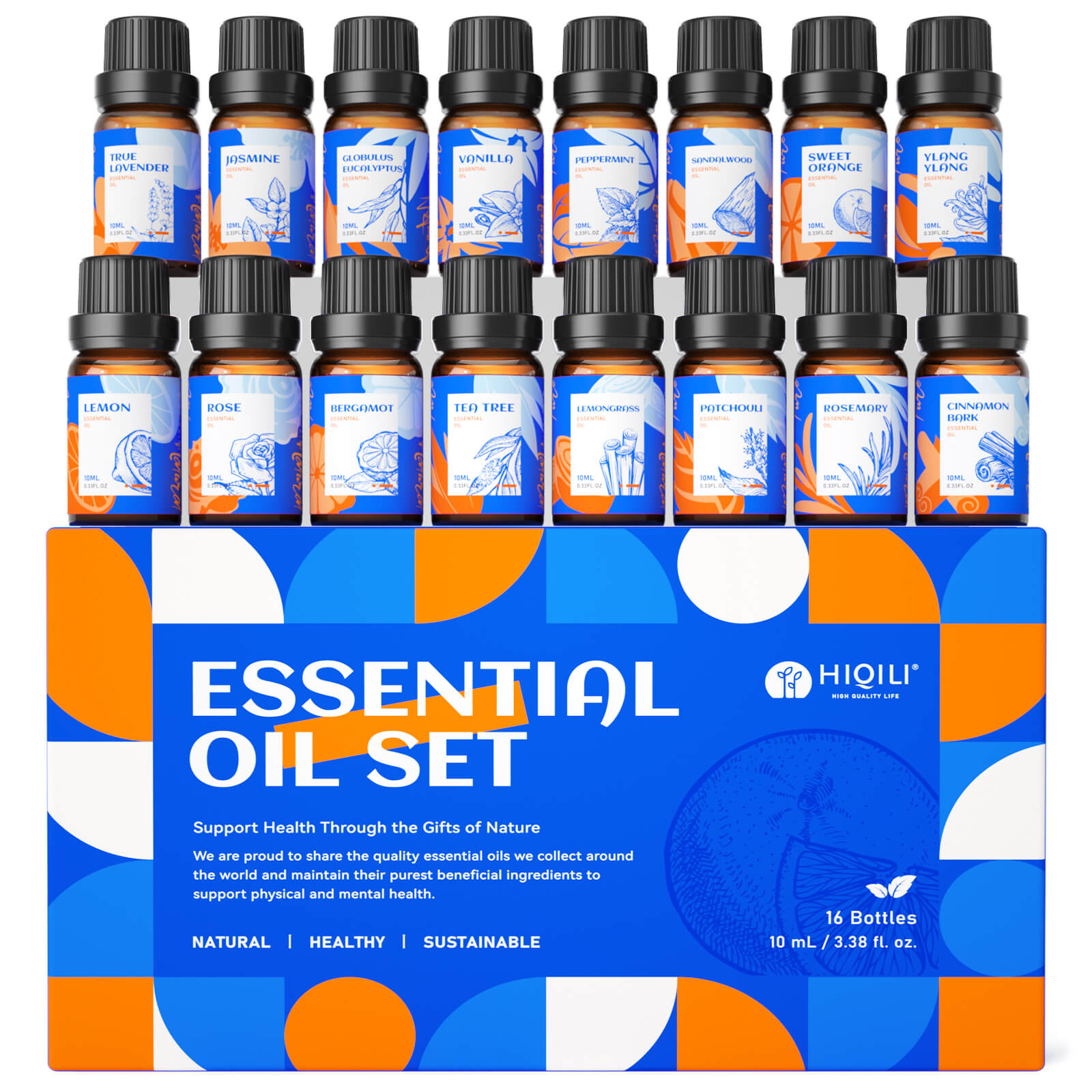
Not sure where to start? Try our Starter Set.
16 of our most popular essential oils in one box — ready to diffuse, blend, or use in any DIY recipe in this guide.
- 16 pure essential oils in one kit
- Perfect for diffusing, skincare & DIY
- Free shipping on all orders
Topical Application: Do's and Don'ts
Topical use is where most beginner mistakes happen. Refer to the dilution table above for exact ratios — this visual reference covers the key rules.
✔ Do's
- Always dilute with a carrier oil before skin contact
- Patch test 24 hours before wider use
- Use 1% dilution for face and sensitive skin
- Use 2–3% for general body application
- Apply citrus oils at night or to covered skin only
- Store oils in dark glass bottles away from heat
✘ Don'ts
- Never apply undiluted oil directly to skin
- Avoid eyes, ears, and mucous membranes
- Don't use eucalyptus or peppermint on young children
- Don't use tea tree around cats or small pets
- Don't go in the sun after applying citrus oils
- Don't use during pregnancy without medical advice
DIY Recipes & Practical Applications
All five recipes below use common essential oils — any pure oil of that type will work. Ingredients are listed without brand links so you can focus on the recipe itself.

🛁 Relaxing Bath Soak
Ingredients:
- 5 drops lavender essential oil
- 3 drops frankincense essential oil
- 1 cup Epsom salt
- 1 tbsp carrier oil (coconut or almond)
Instructions: Mix Epsom salt with carrier oil first, then stir in the essential oils. Add to a warm bath and soak for 20–30 minutes. Always mix oils into the carrier before adding to water — undiluted oil floating on bathwater can irritate skin.
✨ Energizing Room Spray
Ingredients:
- 10 drops lemon essential oil
- 5 drops peppermint essential oil
- 1 cup distilled water
- 1 tbsp witch hazel
Instructions: Combine all ingredients in a spray bottle and shake well before each use. The witch hazel acts as a natural emulsifier to help the oil disperse in water. Spritz into the air or onto linens for an instant refresh.
🌿 DIY Face Toner for Clear Skin
Ingredients:
- 2 drops tea tree essential oil
- 2 drops lavender essential oil
- ¼ cup distilled water
- 1 tbsp apple cider vinegar
Instructions: Combine in a small glass bottle and shake before use. Apply to cleansed skin with a cotton pad, avoiding the eye area. Patch test first — ACV can be drying for sensitive skin. Use in the evening only, as tea tree can increase sun sensitivity.
💪 Muscle Relief Massage Oil
Ingredients:
- 4 drops eucalyptus essential oil
- 3 drops peppermint essential oil
- 2 drops rosemary essential oil
- 1 tbsp carrier oil (jojoba or coconut)
Instructions: Stir all oils together in a small bottle. Massage into sore or tired muscles using slow, circular motions. The cooling sensation from peppermint and eucalyptus is immediate — avoid applying near the eyes or face.
🏠 Natural All-Purpose Cleaner
Ingredients:
- 10 drops lemon essential oil
- 10 drops tea tree essential oil
- ½ cup white vinegar
- ½ cup water
Instructions: Combine in a spray bottle and shake well. Use on countertops, sinks, and bathroom surfaces. Avoid use on marble or natural stone — vinegar can etch the surface over time. This blend keeps for up to 2 weeks.
Side Effects & Precautions
Essential oils are natural — but natural doesn't automatically mean harmless. Here's what can actually go wrong, and how to prevent it.
1. Skin Irritation & Allergic Reactions
Applying undiluted oil — even lavender, which is considered gentle — can cause a burning sensation, redness, or blistering in sensitive individuals. What's worse, repeated exposure to an irritant can cause your skin to develop a permanent sensitivity to that oil. A 24-hour patch test and proper dilution prevent this entirely.
2. Photosensitivity (Citrus Oils)
This is one of the most underestimated risks. Applying lemon, bergamot, or grapefruit oil to exposed skin then stepping outside — even on a cloudy day — can cause phototoxic burns that look like severe sunburn and leave behind dark hyperpigmentation patches that take months to fade. This isn't rare: it's a predictable chemical response. Apply citrus oils at night, or only to areas covered by clothing.
3. Pregnancy
Some oils — particularly rosemary, clary sage, cinnamon, basil, and clove — may stimulate uterine contractions. The evidence is not fully conclusive, but the caution is widely held among healthcare providers and aromatherapists. If you are pregnant or breastfeeding, speak to your doctor before using essential oils topically or in enclosed spaces.
4. Children & Pets
Eucalyptus and peppermint contain compounds that can cause breathing difficulties in children under 10 — even when diffused in the same room. Tea tree oil is toxic to cats and can cause neurological symptoms if they groom themselves after walking through diffused mist. Always research a specific oil before using it around children or animals.
5. Internal Use — Not Recommended
HIQILI does not recommend ingesting essential oils. Even a single drop of a concentrated oil taken internally is the equivalent of consuming multiple cups of raw plant material. Without medical supervision, this poses real risks of toxicity, mucosal irritation, and drug interactions. Please consult a licensed healthcare professional for any questions about therapeutic internal use.
Frequently Asked Questions
Some essential oils can interact with medications. Grapefruit oil, for example, inhibits the same liver enzyme that processes many common drugs — including certain blood pressure, cholesterol, and anti-anxiety medications — potentially raising drug levels in the bloodstream. Always consult your doctor or pharmacist before using essential oils regularly if you take prescription medication.
Stop use immediately. Wash the affected area thoroughly with mild soap and water — do not apply more essential oil. Apply a plain carrier oil (coconut or olive) to the area to help dilute and slow absorption. If redness, swelling, or difficulty breathing occurs, seek medical attention promptly.
Spring: Lavender, lemon, and jasmine — fresh and floral to match the season.
Summer: Peppermint and eucalyptus — cooling and invigorating on hot days.
Fall: Cinnamon, clove, and ginger — warm and spicy for cozy evenings at home.
Winter: Frankincense, cedarwood, and orange — grounding and festive.
For a standard 100–200 ml diffuser, 5–10 drops is the right range. Larger 300–500 ml diffusers can handle 10–15 drops. More is not better — an overpowering concentration in the air can trigger headaches or respiratory irritation, especially in small rooms. Start low and increase if needed.
Essential oils are 100% natural plant extracts with genuine aromatic compounds. Fragrance oils are synthetic or blended compositions designed to deliver a specific scent — used for candles, soaps, and home fragrance where therapeutic properties aren't the goal. Both have their place: essential oils for wellness and topical use, fragrance oils for long-lasting scent in DIY creations.
Store in dark glass bottles in a cool, dry place — a drawer or cabinet away from the stove or windowsill. Heat, light, and oxygen all degrade essential oil compounds over time. Most oils last 1–3 years stored properly; citrus oils oxidize faster and are best used within 12–18 months of opening.
Common Mistakes to Avoid
Most essential oil mishaps come down to the same handful of errors. Being aware of them upfront saves you from a frustrating — or painful — first experience.
Ready to Start Your Essential Oil Journey?
The most important things to remember: always dilute, patch test before trying something new, and start simple. A diffuser and one or two well-chosen oils can genuinely shift how your home feels and how you unwind at the end of the day.
Not sure which oil is right for you?
Our team is happy to help you find the right starting point — whether you're shopping for yourself or as a gift.
Email us at support@hiqili.comMon – Fri, 10am – 4pm. We usually reply within one business day.